

Most homeowners assume roof problems announce themselves loudly—with dripping ceilings, missing shingles, or visible daylight in the attic. In reality, the most expensive roof failures often begin quietly. Hidden roof damage develops out of sight, progresses slowly, and is frequently ignored until it crosses a threshold where repairs become urgent, invasive, and costly.
Roofs are systems, not surfaces. They manage water, air, heat, and structural loads at the same time. When one small component fails, the damage rarely stays isolated. Moisture migrates, materials weaken, and secondary problems appear far from the original defect. This is why understanding hidden roof damage is not just about spotting issues—it’s about recognizing patterns before they escalate.
This guide explains how to identify subtle warning signs, where damage commonly hides, how modern inspection tools reveal what eyes miss, and what preventive actions reduce the risk of emergency repairs.
Why Hidden Roof Damage Is So Dangerous
Hidden damage is dangerous because it operates on delay. Water intrusion can exist for months or even years before becoming visible indoors. During that time, it may be:
- Saturating insulation and reducing energy efficiency
- Weakening roof decking and fasteners
- Encouraging mold growth inside enclosed cavities
- Spreading along framing members to new areas
According to the U.S. Federal Emergency Management Agency, moisture intrusion that goes undetected “can compromise structural integrity and significantly increase repair costs over time.” The key issue is not just water—it’s time. The longer damage remains hidden, the more systems it affects.
The First Layer: Exterior Signs Most Homeowners Miss
A basic visual check from the ground can reveal early clues, but only if you know what to look for.
Subtle shingle irregularities
Shingles don’t need to be missing to be failing. Early signs include slight curling at edges, uneven coloration, or patches where granules are thinning. These changes often indicate aging, heat stress, or moisture intrusion beneath the surface.
Flashing that looks “almost fine”
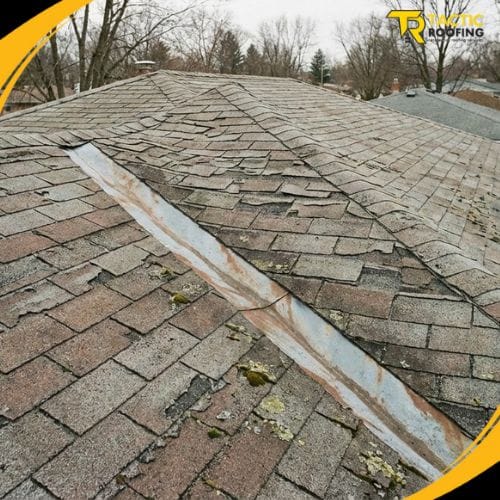
Flashing failures are a leading cause of roof repair for leaks, yet they’re often overlooked because they don’t look dramatic. Slight lifting, hairline cracks in sealant, or corrosion around chimneys and wall transitions are enough to let water in.
Sagging lines and soft transitions
Rooflines should appear straight and consistent. A subtle dip near a valley or ridge may indicate moisture-damaged decking underneath. This is especially important when comparing flat roof vs. sloped designs—flat roofs tend to hide structural deflection longer, while sloped roofs may reveal it earlier through uneven planes.
Gutter and drainage clues
Overflowing gutters, persistent debris buildup, or rust stains beneath downspouts can signal underlying roof drainage issues. Water that doesn’t exit cleanly often finds a path backward into the roof assembly.
The Second Layer: Interior Clues That Don’t Look Like Roof Problems
Some of the most telling signs of hidden roof damage appear inside the home—but are mistaken for HVAC or cosmetic issues.
Temperature inconsistencies
Rooms that are noticeably colder in winter or hotter in summer may have wet or compacted insulation caused by roof leaks. Moist insulation loses much of its thermal resistance.
Odors and air quality changes
A faint musty smell in upper floors or closets near exterior walls can indicate slow moisture accumulation. Mold doesn’t need visible water to thrive—humidity trapped by hidden leaks is often enough.
Nail pops and drywall movement
Seasonal nail pops near ceilings or upper wall joints can be linked to roof moisture cycling. Wood expands and contracts when repeatedly exposed to dampness, stressing fasteners and finishes.
Stains that fade, then return
Temporary ceiling discoloration that disappears during dry months is often dismissed. In reality, this pattern usually means intermittent leakage that coincides with wind-driven rain or snow melt.
Common Hidden Weak Points in Roof Systems
Certain areas fail more often than others—and they fail quietly.
Valleys and transitions
Roof valleys concentrate water flow. Even minor debris buildup can redirect water sideways under shingles. Because valleys are reinforced, leaks here often spread laterally before appearing inside.
Attic penetrations
Plumbing vents, wiring penetrations, and recessed lighting openings are frequent sources of air and moisture leakage. Poor sealing allows warm, moist air to rise into the attic and condense on cold surfaces.
Flat roof membranes
On flat roofs, hidden damage often occurs beneath the membrane. Small punctures or seam separations allow water to travel between layers, making detection difficult without specialized tools.
Parapets and edge details
Parapet walls trap moisture and are exposed on multiple sides. Cracks in coping or flashing allow water to enter and migrate downward, often emerging far from the original entry point.
Using a Roof Inspection Checklist to Catch Problems Early
A structured roof inspection checklist helps homeowners move beyond casual observation. At minimum, inspections should include:
- Visual exterior review after major storms
- Interior attic inspection for moisture, staining, or compressed insulation
- Flashing and penetration checks
- Gutter and drainage assessment
- Seasonal comparison of roof planes and lines
Professional inspectors expand this checklist with moisture meters, infrared tools, and documentation that tracks changes over time.
The Insurance Institute for Business & Home Safety advises that “routine inspections are one of the most effective ways to identify vulnerabilities before they become claims.” This applies equally to residential roofs.
Technology-Assisted Detection: Seeing What Eyes Can’t
Modern roofing inspections increasingly rely on technology to identify hidden roof damage without invasive demolition.
Thermal imaging
Infrared cameras detect temperature differences caused by moisture. Wet materials retain heat differently than dry ones, making leaks visible even when surfaces appear intact.
Drone inspections
Drones provide high-resolution views of difficult-to-access areas, such as steep slopes or large commercial roofs. They’re particularly useful for identifying membrane defects, flashing issues, and drainage patterns.
Moisture scanning
Electronic moisture scanners measure conductivity beneath roofing materials. This method is common on flat roofs and helps map wet areas precisely.
These tools are not DIY-friendly but are invaluable when damage is suspected but not confirmed.
DIY Roof Repair: Where to Draw the Line
Many homeowners are tempted to attempt DIY Roof Repair when they suspect an issue. While minor tasks like clearing debris or resealing visible flashing may be reasonable, hidden damage is rarely suitable for DIY solutions.
Risks include:
- Sealing over trapped moisture, accelerating rot
- Damaging membranes or shingles during inspection
- Missing the true source of the problem
Temporary fixes can also complicate professional repairs later, increasing labor time and cost.
As Consumer Reports has noted, roof repairs done without proper diagnosis “often treat symptoms rather than causes, leading to repeated failures.” The goal should always be resolution, not concealment.
Preventive Action Plans That Reduce Emergency Repairs
The most effective way to manage hidden roof damage is prevention, not reaction.
Annual professional inspections
Scheduling a yearly inspection—especially before winter or storm season—creates a baseline and catches changes early.
Post-storm assessments
High winds, hail, and heavy snow can cause micro-damage that worsens over time. A quick post-event check can prevent months of hidden deterioration.
Attic performance upgrades
Improving insulation, sealing air leaks, and addressing ventilation issues reduce condensation-related damage and extend roof lifespan.
Documentation and monitoring
Keeping inspection photos and reports allows you to compare conditions year over year and identify slow-developing problems.
Flat Roof vs. Sloped: Different Designs, Different Hidden Risks
Sloped roofs shed water efficiently but hide damage under overlapping layers. Flat roofs expose damage more evenly but allow water to linger longer. Neither design is immune to hidden roof damage—it simply manifests differently.
Sloped roofs often fail at transitions and penetrations. Flat roofs fail through ponding, membrane fatigue, and edge details. Understanding your roof type helps focus inspections where they matter most.
Final Thoughts: Small Signs, Big Consequences
Hidden roof damage rarely announces itself. It whispers—through slight discoloration, subtle drafts, or minor irregularities that are easy to ignore. But those whispers represent active processes that don’t stop on their own.
By learning how to read these signs, following a disciplined roof inspection checklist, and knowing when DIY Roof Repair is inappropriate, homeowners can dramatically reduce the risk of sudden leaks, structural damage, and emergency repair bills.
In roofing, what you don’t see is often what costs the most.