
It usually starts the same way: a faint scratching at night, a “thump” that seems to move across the ceiling, or a new stain that appears after a windy rain. Homeowners often assume it’s a small leak or normal house noise—until they discover the real culprit: animals damaging roof components to create a warm, dry shelter.
In Ontario neighborhoods—especially areas with mature trees, detached homes, and easy roof access—wildlife pressure on roof systems is more common than people think. Raccoons, squirrels, and birds aren’t trying to “destroy” your home; they’re trying to survive. Unfortunately, their survival strategy often involves prying open soffits, chewing through weak points, and nesting inside attic insulation. That can lead to structural damage, mold risk, compromised ventilation, and repeat infestations if the entry point isn’t fixed correctly.
This guide is written for local homeowners who want practical answers: where animals get in, what warning signs to watch for, what prevention actually works, and why quick action saves money.
Why Roof Systems Are a Magnet for Wildlife
Your roofline is the perfect wildlife “real estate” because it offers three things animals want:
- Safety: predators are less likely to reach a high entry point.
- Warmth: attics hold heat, especially in winter.
- Dry shelter: the attic stays protected from rain and snow.
The challenge is that roofs are built with multiple layers and transitions—soffits, fascia, vents, flashing, valleys—and animals are excellent at finding the weakest detail. Once a small weakness becomes an opening, the damage typically accelerates.
The Big Three: How Each Animal Damages a Roof
1) Raccoons: Strong hands, stronger habits
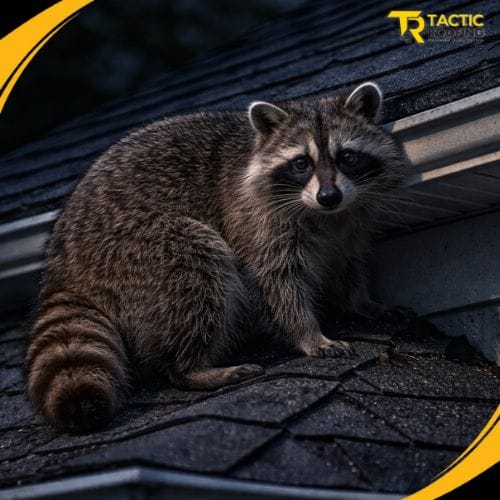
If you’re dealing with raccoon roof damage, you’re dealing with an animal that can pry and tear with surprising force. Raccoons commonly target:
- loose or rotting soffit panels
- fascia corners (especially near gutters)
- roof-to-wall transitions
- weak vent covers
- areas behind chimneys where debris collects and hides activity
They don’t just “sneak” in—they often widen an opening until it’s usable. And they tend to return to the same den sites, especially if they’ve raised young there before.
Raccoons also introduce a health concern when they establish latrines. The CDC notes:
“Roundworm eggs are passed in the feces (poop) of infected raccoons.”
This is one reason cleanup and attic remediation should be handled carefully, not casually.
2) Squirrels: Chewers that target the smallest gap
Squirrels don’t need a big hole. If they find a weak edge, they’ll enlarge it—fast. Their teeth grow continuously, so chewing is constant behavior. The typical pattern:
- chew at soffit corners and fascia edges
- enlarge tiny construction gaps
- enter near roof returns, dormers, or eaves
- build nests in insulation (often over bathrooms or warm rooms)
Squirrels are notorious for damaging:
- attic insulation (compressed, torn, contaminated)
- wiring (serious fire risk)
- ventilation baffles (blocked airflow, higher moisture risk)
3) Birds: Nesters that block ventilation and trap moisture
Birds may not tear into your attic like raccoons, but they can create costly secondary problems by nesting in:
- soffit and gable vents
- roof exhaust vents (bathroom or kitchen)
- chimney caps (if missing or damaged)
- valley areas where debris accumulates
A nest that blocks airflow can increase humidity and condensation, contributing to mold and wood decay over time—especially in winter.
The Most Common Entry Points (Where to Look First)
Wildlife entry is rarely random. The same weak points show up again and again across roof inspections.
Soffit entry
Soffit entry is the top offender because soffits are often:
- thin materials
- nailed or clipped in place (not designed for prying)
- compromised by water damage from overflowing gutters
Loose soffit panels are essentially a welcome sign to raccoons and squirrels.
Fascia corners and roof edges
Fascia boards rot quietly when gutters overflow or drip edge is missing. Once wood softens, animals can pry it open.
Roof vents and exhaust terminations
Plastic vents can crack, warp, or loosen. Screens corrode. Covers get brittle. Wildlife finds the failure point and pushes through.
Chimney zones and “dead water” areas
Behind chimneys and in valleys, debris accumulates and moisture lingers. That creates softer materials and better hiding places—both attractive to animals.
Warning Signs Homeowners Miss (Until It Gets Expensive)
If you catch the problem early, attic animal prevention is far easier. These are the signs that should trigger action:
- Noises at night (raccoons are typically nocturnal)
- Scratching, rolling, or quick tapping sounds (often squirrels)
- A sudden “stale” or ammonia-like odor (contamination)
- Drips or stains that appear after wind-driven rain
- Insulation “mounding” or disturbed areas visible from attic access
- Daytime bird activity repeatedly returning to one vent area
- Shingles or soffit pieces found in the yard
One more clue: repeat issues after a patch. If someone “sealed a hole” but didn’t address secondary entry points—or didn’t use a one-way exclusion approach—the animals often return.
Why Quick Action Prevents Structural Damage
Wildlife damage gets expensive because it’s not just the hole. It’s what happens after the hole.
- Moisture intrusion
Openings at soffits and fascia invite rain and snow into the roof assembly. - Ventilation disruption
Blocked vents increase condensation risk, shortening roof life. - Insulation loss
Torn/compressed insulation reduces performance and can promote moisture issues. - Decking and framing deterioration
Repeated wetting behind the scenes leads to rot.
This is where the lesson from “The Cost of Neglecting Roof Maintenance” becomes real: small problems become system problems when they’re ignored.
Roof Animal Proofing That Works (Without “Quick Fix” Myths)
There’s a difference between “blocking today’s hole” and true roof animal proofing. Good prevention follows a sequence.
Step 1: Confirm the species and the entry route
You want to fix the actual pathway, not just a visible gap. A good inspection checks:
- soffit lines and corners
- roof returns and overhang transitions
- vent covers and flashings
- attic side evidence (tracks, droppings, disturbed insulation)
Step 2: Use humane exclusion—not trapping inside
Exclusion means letting animals exit, then preventing re-entry. The Wisconsin Humane Society describes the typical access points clearly:
“Animals like Gray Squirrels and Raccoons usually gain access through holes in loose, missing, or rotten soffit, fascia, or roof boards.”
That’s why sealing without confirming exit is risky. You can end up trapping an animal in the attic, creating a bigger mess and a more urgent emergency.
Step 3: Reinforce, don’t just patch
The best repairs use:
- heavy-gauge metal flashing at weak corners
- properly fastened soffit and fascia replacement where rot exists
- upgraded vent covers (wildlife-rated where needed)
- re-secured drip edge and edge detailing
Step 4: Remove attractants and reduce roof access
This is often overlooked but highly effective:
- trim branches away from rooflines
- secure garbage and compost
- reduce food sources (bird feeders near roof access points can be a problem)
- ensure chimney caps and vent screens are intact
What “Good Workmanship” Looks Like (So You Can Spot It)
Because this is a high-intent topic, here’s a homeowner-friendly quality checklist:
- Repairs address soffit entry and nearby secondary gaps, not just one spot
- Vent screens are tight, corrosion-resistant, and properly fastened
- Any rotten wood is replaced—not covered
- Corner areas are reinforced with metal (not just caulk)
- The repair looks integrated, not “stuck on”
- Attic insulation is assessed for contamination and airflow blockages
If a contractor’s plan is mostly sealant, that’s a red flag. Sealant is a finishing detail—not a structural wildlife barrier.
When You Should Treat It as an Emergency
Call for help quickly if you notice:
- active animals in the attic (especially with loud movement)
- daylight visible through soffits/roof edges
- water intrusion near the entry point
- droppings or strong odor (health risk)
- chewed wiring or exposed electrical hazards
At that stage, you’re no longer doing prevention—you’re preventing major structural and indoor-air issues.
Final Thoughts: Small Entry Points, Big Consequences
Wildlife problems aren’t just “pest issues.” They are roof-system issues. When animals damaging roof components create openings, the result can be recurring leaks, ruined insulation, ventilation failures, and expensive repairs that would have been minor if addressed early.
If you suspect raccoon roof damage, squirrel chewing, or birds nesting in vents, the best move is the same: identify the entry point, confirm the exit, reinforce the weak detail, and restore the roof system so it sheds water and breathes properly.
Fast action is cheaper than cleanup. And in roof work, prevention is almost always the best repair.