


Most homeowners notice a roof problem only when a stain appears on the ceiling. But long before that moment, water usually leaves clues—especially when it is not draining the way your roof was designed to. In practice, roof drainage problems are one of the fastest ways to turn a “small exterior issue” into a multi-system headache: roofing, siding, fascia, insulation, drywall, flooring, and even the foundation can all get pulled into the same domino effect.
The reason is simple: a roof is not just a cover. It is a water-management system. Shingles, underlayment, flashing, gutters, downspouts, drains, and the grading around the home all work together to move water away—quickly and predictably. When any link in that chain fails, water starts doing what it always does: it finds the easiest path downhill, and it never stops looking for a way in.
Why drainage failures are more dangerous than “a normal leak”
A typical puncture leak is localized—you can often trace it to a pipe boot, a flashing detail, or a missing shingle. Drainage issues are different. They can spread water across large areas of the roof surface, push moisture where it does not belong, and keep materials wet for long periods. That combination accelerates rot, corrosion, mold, and freeze-thaw damage.
This is also why drainage issues can get expensive quickly. If water spills over a gutter edge during every storm, that is not just “messy.” It is repeated saturation of wood and soil, repeated swelling and drying cycles, and repeated opportunities for water to reach structural components.
As This Old House notes,
“Just 1 inch of water in the typical home can cause up to $25,000 worth of damage,”
The most common roof drainage problems (and what they cause)
1) Clogged gutters and downspouts
Leaves, pine needles, granules from aging shingles, and even small nests can clog a gutter system faster than most people expect. Once the trough is blocked, water backs up and spills over the front edge, behind the gutter, or into fascia boards.
What it leads to:
- Fascia/soffit rot and peeling paint
- Water staining on siding or masonry
- Basement moisture from water pooling near the foundation
- Ice dams in winter climates when trapped water refreezes at the eaves
2) Gutters installed with poor slope (or sagging over time)
Gutters need a consistent pitch toward the downspouts. If the slope is flat—or worse, sloped the wrong direction—water sits in the trough. Standing water corrodes fasteners, pulls gutters out of alignment, and overflows during heavy rain.
What it leads to:
- Persistent overflow at the same “low spot”
- Loose hangers and separated seams
- Hidden rot behind the gutter line that only becomes visible once the wood fails
3) Undersized gutter or downspout capacity
Even clean gutters can overflow if they are too small for the roof area, roof pitch, or local rainfall intensity. This is especially common after an addition or roof redesign when the original drainage system is not upgraded.
What it leads to:
- Overflow during peak rainfall (even with “no clog”)
- Erosion or trenching beneath drip lines
- Water driven behind siding and trim in wind-driven storms
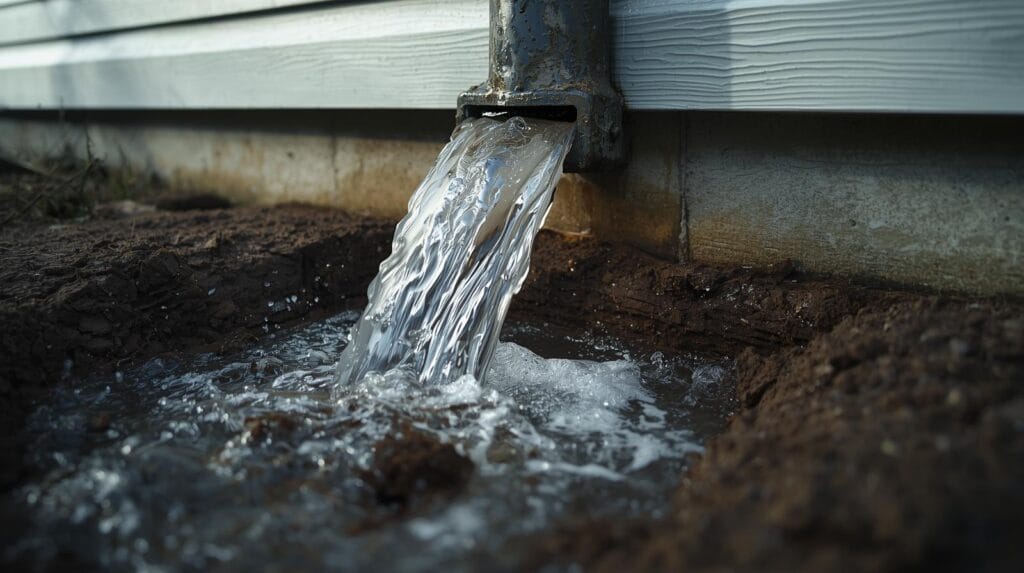
4) Downspouts discharging too close to the house
A gutter can perform perfectly, but if the downspout dumps water right beside the foundation, the home still loses. Over time, this can saturate soil, increase hydrostatic pressure against foundation walls, and invite basement dampness.
The US EPA warns homeowners to think carefully about where redirected roof runoff ends up:
“Consider local regulations and where the water will be directed to avoid property damage, unsafe conditions or other potential problems,”
What it leads to:
- Foundation cracking or settling in vulnerable soils
- Basement seepage and musty odors
- Mold risk in finished lower levels
- Winter icing on walkways if discharge crosses pedestrian areas
5) Valley and roof-plane “collection zones” that trap debris
Roof valleys move a lot of water. When a valley fills with debris, water slows down, spreads sideways, and can push under shingles—especially in heavy downpours. The same thing happens on low-slope transitions, behind chimneys, and where dormers meet main roof planes.
What it leads to:
- Chronic wetting of valley flashing and underlayment
- Accelerated shingle wear in a concentrated strip
- Leaks that appear far from the valley because water travels along framing
6) Flat or low-slope roof drain issues (clogged internal drains or scuppers)
On flat roofs, drainage is everything. If internal drains or scuppers clog, water ponds. Ponding water adds weight, stresses seams, and finds microscopic openings over time.
What it leads to:
- Membrane seam stress and premature failure
- Interior leaks that are hard to trace
- Structural loading concerns during prolonged storms
7) Ice dams and freeze-thaw drainage traps
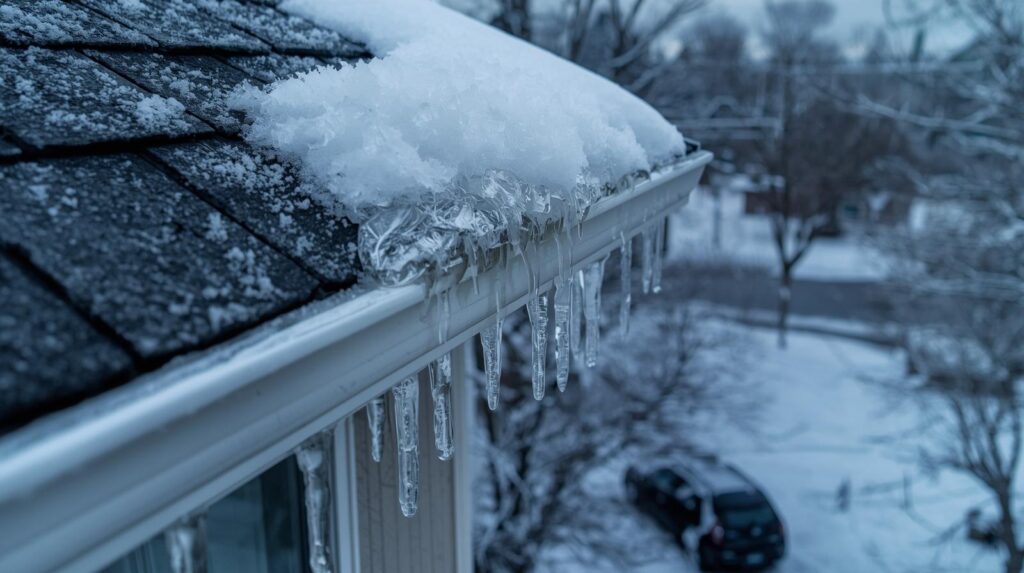
In cold regions, roof drainage problems often show up as ice. Heat loss from the home melts snow on the roof, water runs toward the cold eaves, then refreezes. Over time, ice forms a dam that blocks runoff, forcing water under shingles and into the roof assembly.
What it leads to:
- Wet insulation and reduced R-value (which worsens the cycle)
- Rotting roof decking near eaves
- Interior staining along exterior walls, not just ceilings
“Serious damage” is usually a chain reaction
When drainage is failing, the damage rarely stays in one place. Common escalation paths look like this:
- Overflow at gutter edge → constant fascia wetting → wood rot → gutter loosens → more overflow
- Ponding or slow drainage → persistent moisture at seams/penetrations → small leak → wet insulation → mold risk
- Downspout dumping at foundation → soil saturation → basement humidity → mold and odor issues → finishing materials fail
The frustrating part is that a homeowner might fix the symptom (patch a stain, repaint trim) while the real cause continues outside.
Warning signs you can spot before the ceiling stain
If you want early detection (and better Roof leak prevention), walk the exterior during or right after a heavy rain. You are looking for behavior, not just damage.
Key signs:
- Water spilling over gutters in sheets
- Drips behind the gutter line (often visible at fascia joints)
- Downspouts that “burp” or overflow at the top elbow
- Eroded soil lines beneath eaves or trenches near discharge points
- Splash marks or algae streaks on siding
- Persistent puddles near the foundation after storms
On the roof itself (from the ground or with professional inspection):
- Debris-packed valleys
- Curling shingles near eaves (often linked to ice dam stress)
- Granule buildup in gutters (signals shingle aging and potential clogging)
- Visible sagging gutter runs or separated seams
Practical fixes that prevent major repair bills
Drainage improvements are often “small work” compared to structural repairs, but they need to be done correctly. A few high-impact steps:
Maintenance steps that matter
- Clean gutters at the right frequency for your tree cover (often spring and late fall)
- Flush downspouts with water to confirm full flow (a clean-looking top can still hide a clog lower down)
- Re-secure loose hangers and correct sagging runs before seams split
- Keep valleys and collection zones clear of debris
Upgrades that solve recurring problems
- Add downspout extensions to move discharge away from the foundation (and route it where it will not create hazards)
- Upsize gutters/downspouts when overflow happens during heavy rain even after cleaning
- Add splash guards or diverters in chronic overflow areas (as part of a complete solution, not a band-aid)
- Improve attic insulation/air sealing to reduce ice dam conditions in winter climates
When to call a professional
Drainage work becomes unsafe or technically complex when:
- You have steep slopes or multiple roof levels
- You suspect ponding on a low-slope roof
- You see signs of rotted fascia, soft decking, or repeated interior moisture
- You want a capacity review (gutter sizing, downspout count, slope verification)
How drainage failures drive Roof Repair Cost
Drainage problems increase Roof Repair Cost in three main ways:
- They expand the wet area
A small defect becomes a wide moisture footprint—more decking, more underlayment, more insulation, more drywall. - They repeat the exposure
One storm is survivable. Repeated wetting over months creates rot, corrosion, and microbial growth that cannot be “patched” away. - They create hidden damage
Water can travel along rafters, trusses, or top plates and show up far from entry points. Locating the true source often requires more diagnostic time and sometimes selective opening of finished surfaces.
In other words, drainage issues are not just “roof problems.” They are building-envelope problems, and the longer they run, the more trades get involved.
A simple seasonal drainage checklist
Spring:
- Clear winter debris and check for loose hangers
- Confirm downspouts discharge away from the home (and not into settled soil)
Summer:
- Look for overflow behavior in heavy rain
- Check for algae streaking or siding splash marks that suggest misdirected flow
Fall:
- Clean gutters after leaf drop
- Inspect valleys and roof transitions before freeze-thaw season
Winter (where applicable):
- Watch for recurring ice buildup at eaves
- Address attic heat loss and ventilation issues that contribute to ice dams
Closing perspective: treat drainage like a roof system, not an accessory
If you take one idea from this, let it be this: most serious water damage starts outside, with water going where it was never meant to go. Roof drainage problems do not always announce themselves with dramatic leaks. They often begin as small overflows, slow drains, or poorly routed discharge—and then quietly build into rot, mold, and structural deterioration.
The fastest path to fewer repairs is disciplined inspection plus targeted upgrades. When water exits the roof quickly, cleanly, and far from the structure, everything downstream lasts longer.