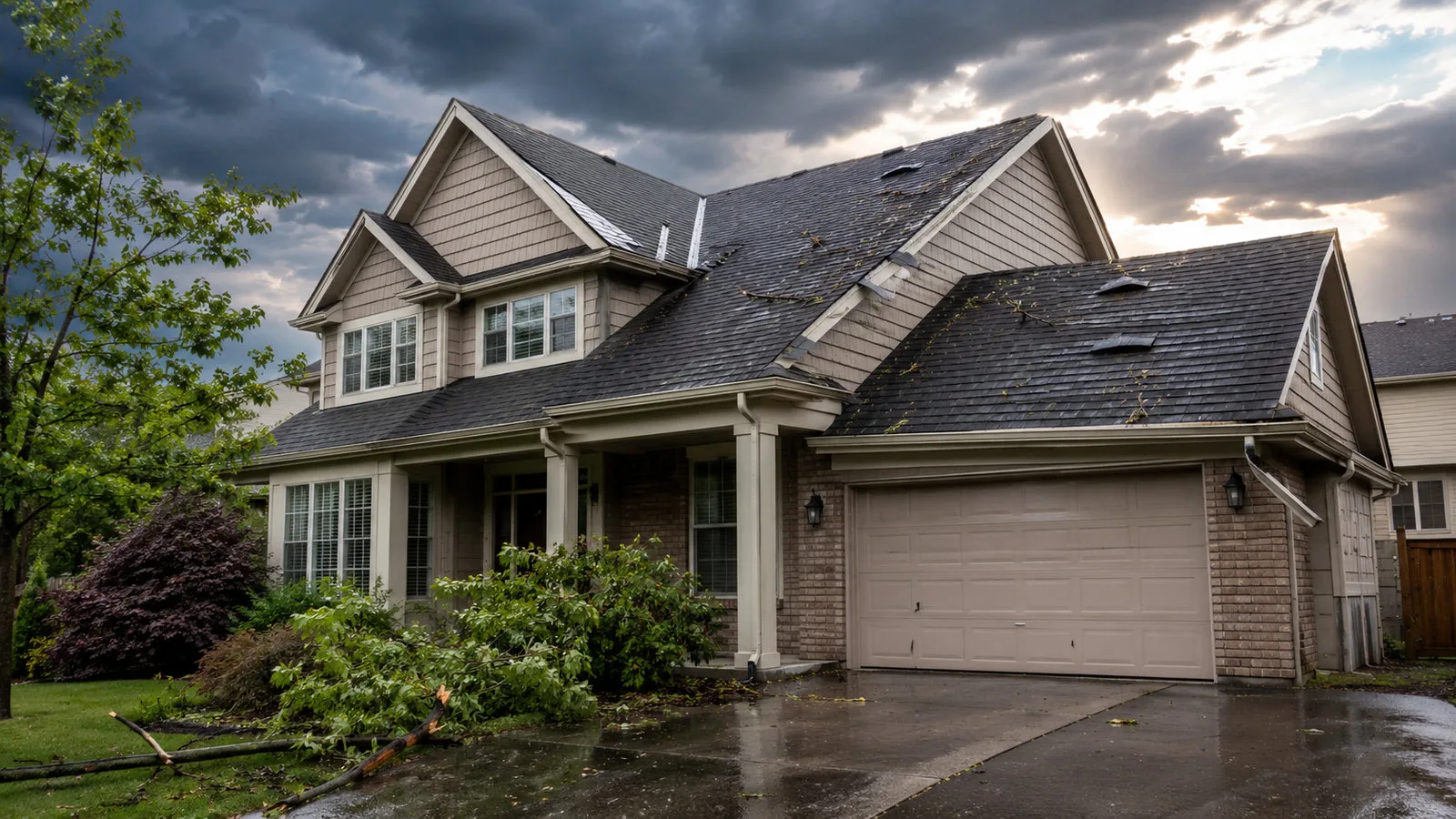
A windy storm can make a roof look worse than it really is. It can also do the opposite. Your roof may look fine from the driveway while the shingles are already loose, lifted, creased, or starting to let water underneath.
That is where many GTA homeowners get stuck.
Wind damaged shingles do not always mean the whole roof needs to be replaced. One shingle in the yard may only need a proper repair. But a few lifted shingles can also be the first sign of a bigger issue, especially if the roof is older or the same section has already been repaired before.
Here is how to think through it after a storm.
Start with what you can see safely
Do not climb onto the roof after a windstorm.
Shingles can be slippery. Gutters may be loose. Some damage is also hard to spot, even when you are standing on the roof.
Instead, walk around the property and look from the ground. Check for:
- Shingles on the lawn, driveway, or beside the house
- Shingle corners lifting along the roof edge
- Exposed black underlayment or bare-looking patches
- Pieces of flashing near the chimney, wall, or vents
- Granules collecting at the bottom of downspouts
- Water stains inside the attic or on the ceiling
A missing shingle is easy to understand. Wind damaged shingles that are only lifted are harder to judge.
They can settle back down after the wind stops. The problem is that the seal may already be broken. Once that seal is gone, the next round of wind-driven rain has a much easier path underneath.
If you want to understand why small storm issues should not be ignored, read our guide on why you should not delay roof repair after a storm.
When a roof repair usually makes sense
A repair is usually the right call when the damage is small, isolated, and the rest of the roof is still in decent condition.
For example, a few shingles may have blown off one slope. If the surrounding shingles are still flat, flexible, and well sealed, a targeted repair may be enough.
The same is true when the issue is tied to one weak point, such as:
- A roof edge
- A vent
- A small flashing area
- One exposed corner that caught the wind
- A single section where shingles lifted
A repair may also make sense if the roof is not very old and the shingles match reasonably well. In that case, replacing the damaged pieces can stop the immediate leak risk without turning a small storm issue into a full replacement project.
The key word is “properly.”
A surface patch can hide the problem for a while. But it will not fix broken seals, damaged underlayment, bad flashing, or soft decking underneath. That is why a real roof repair should look at the surrounding area, not just the missing shingle.
When roof replacement becomes the smarter option
Replacement becomes worth discussing when storm damage is spread across multiple areas. It also becomes more likely when the roof was already near the end of its life before the storm hit.
Some warning signs are:
- Wind damaged shingles in several sections
- Curling or brittle shingles
- Heavy granule loss
- Repeated leaks in the same area
- Previous repairs that are starting to fail
- Soft or wavy-looking decking
- Damage around valleys, chimneys, skylights, or roof edges
This is where homeowners sometimes waste money.
They pay for one repair. Then another. Then another. A year later, they still end up replacing the roof.
If the roof is already tired, a storm may simply expose what was coming anyway. That does not mean every damaged roof needs replacing. It means the inspection should be honest.
A good roofer should be able to show you whether the issue is isolated or part of a larger pattern. If the damage is widespread, a full roof replacement may be the better long-term decision.
The insurance question
If the damage happened suddenly during a storm, document it before anything gets moved or cleaned up.
Take photos of:
- Shingles on the ground
- Visible roof damage
- Interior water stains
- Fallen branches
- Damaged gutters or downspouts
- Any debris connected to the storm
Do not wait if water is actively getting in. Temporary protection may be needed to prevent further damage.
Insurance companies generally expect homeowners to take reasonable steps to limit the problem once they know about it.
What you should not do is guess.
A roofer can inspect the roof and provide a written scope. That helps you understand what is damaged, what needs repair, and whether the issue looks storm-related or age-related.
Why wind damage often shows up later
The frustrating part about wind damage is that it does not always leak right away.
A shingle can lift just enough to break the seal. A nail can loosen. Flashing can shift slightly. Everything may look normal until the next heavy rain comes from the wrong direction.
Then water gets under the shingle line. It follows the decking. It may show up as a ceiling stain far away from the actual entry point.
That is why checking after a storm matters, even if there is no active leak today.
For more signs that are easy to miss, see our guide on hidden roof damage.
What Tactic Roofing looks for during an inspection
When we inspect storm damage, we are not just counting missing shingles.
We look at the condition of the surrounding roof so the recommendation makes sense.
That includes:
- Shingle seals and lifted edges
- Missing, cracked, or creased shingles
- Roof valleys and drainage paths
- Flashing around walls, vents, and chimneys
- Exposed underlayment
- Soft spots or signs of decking movement
- Eavestrough and downspout damage
- Interior signs of water entry when needed
The goal is simple.
We want to know whether the roof needs a clean repair or whether replacement should be on the table.
Local storm damage help across the GTA
Storm damage does not hit every neighbourhood the same way. One side of the GTA can get heavy wind while another only gets rain.
Tactic Roofing helps homeowners looking for a Brampton roofing company, Mississauga roofing services, Toronto roofing help, Oakville roof repair and replacement, Halton Hills roofing inspections, Caledon roofing services, and Orangeville roofing support.
Do not let a small storm problem turn into a bigger one
If you found shingles on the ground or noticed lifting after a storm, get it checked before the next heavy rain.
Wind damaged shingles are much easier to deal with early. A small repair is usually simpler than soaked insulation, damaged drywall, or a roof leak that spreads into the attic.
If you are not sure whether your roof needs repair or replacement, book a free inspection with Tactic Roofing and get a straight answer before the next storm decides for you.